
Meet Our Neurologist
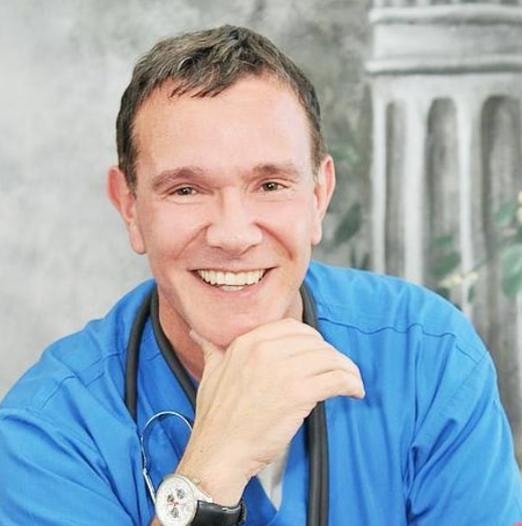
Miguel (Mike) Pappolla, MD, PhD
Board-Certified in Neurology, Pain Medicine, Neuropathology, Anatomic Pathology & Clinical Pathology
Board Certifications
Degrees
Specialties
Location
Dr. Miguel (Mike) Pappolla is a board-certified neurologist, TBI specialist, and concussion expert with over two decades of experience helping patients in Houston, Texas, and the surrounding communities. His practice focuses on conditions that are often complex, misunderstood, or undertreated — traumatic brain injury, concussion, and chronic pain among them.
Dr. Pappolla's training gave him both a clinical and a scientific foundation. He earned his MD and PhD, and that dual background shapes how he approaches every patient encounter. As a TBI doctor and concussion physician in Houston, he uses advanced neurological diagnostics, evidence-based treatment protocols, and a thorough understanding of how the brain and nervous system function to arrive at the most accurate diagnosis possible.
Dr. Pappolla takes the time to understand not just a patient's symptoms, but their life — their work, their goals, and what getting better means to them. That foundation helps him build a treatment plan tailored to each patient's specific needs.
He has been recognized for compassionate care, and that recognition reflects what he believes medicine should be: rigorous, personal, and patient-centered. Whether a patient is dealing with the aftermath of a brain injury, struggling with chronic pain, or searching for answers after years of inconclusive evaluations, Dr. Pappolla is committed to providing the highest level of neurological care in Houston.
Academic & Prestigious Leadership Appointments
Faculty, NIH & Institutional Roles
Throughout my career I have held medical school faculty appointments, served as a consultant to the National Institutes of Health, and been recognized with named professorships and institutional commendations across the country. Cards marked Past Appointment reflect positions that are no longer active.
Professor of Neurology, Department of Neurology
University of Texas Medical Branch (UTMB), Galveston, Texas
Current faculty appointment at one of the nation's leading academic medical centers. UTMB is a major research and teaching institution with a nationally recognized neurology program.
Faculty, Department of Neurology
University of South Alabama
Teaching faculty in the neurology residency program. Recognized with the Teaching Award given by graduating neurology residents (2001).
Faculty, LSU Health Sciences Center
Louisiana State University Health Sciences Center, New Orleans
Academic faculty appointment recognized with the Commendation Award for Academic Excellence and Leadership (2006).
Josephine T. Morse Endowed Professor in Neuropathology
Medical University of South Carolina
Named endowed professorship in neuropathology, one of the most prestigious forms of academic recognition in medicine (2006).
Consultant & Grant Reviewer
National Institutes of Health (NIH)
Served as a consultant and peer reviewer for the NIH, evaluating research grant applications in neuroscience and neurodegeneration. Recipient of the James A. Shannon Director's Award ($100,000), an NIH recognition for exceptional scientific contribution (1998).
Commendation for Academic and Clinical Excellence
Department of Veterans Affairs, Washington, DC
Recognized for outstanding academic and clinical contributions to the VA healthcare system (1990).
Director of Neuroscience & Chief of Neurology Service
Past AppointmentMemorial Hospital at Gulfport, Mississippi
Led the Neuroscience division and directed the Neurology service at this tertiary care trauma center serving approximately one-third of the state of Mississippi.
Chief of Service, Department of Pathology & Laboratory Medicine
Past AppointmentVA Hospital, Montrose, New York
Directed the Department of Pathology and Laboratory Medicine at what was then the largest neuropsychiatric VA hospital in the United States.
Research & Scientific Contributions
Three Decades of Published Research
Dr. Pappolla's research career spans more than three decades and covers traumatic brain injury, chronic pain, and the molecular mechanisms of neurodegeneration. His work on Alzheimer's disease has examined oxidative stress, cholesterol and lipid metabolism, lymphatic clearance of amyloid beta, and the neuroprotective role of melatonin and related compounds. He has also contributed substantially to interventional pain medicine, biomarker discovery, and the clinical management of TBI-related pain. A full account of his academic and research career is available in his curriculum vitae, which can be downloaded below.
Pioneered research on melatonin as a neuroprotective agent in Alzheimer's disease, demonstrating its ability to inhibit amyloid beta fibrillogenesis, reduce oxidative stress, and improve survival in transgenic mouse models.
Contributed foundational work on the relationship between cholesterol, lipid metabolism, and Alzheimer's amyloid pathology, including early evidence that hypercholesterolemia accelerates amyloid deposition.
Led research on lymphatic clearance of amyloid beta from the brain, advancing understanding of how the brain removes toxic proteins and opening new avenues for non-invasive biomarker detection.
Published novel findings on blood serum metabolic biomarkers for early Alzheimer's diagnosis using artificial intelligence, with potential for a simple, non-invasive diagnostic test.
Contributed to clinical research on central sensitization in mild traumatic brain injury, insulin resistance in fibromyalgia, and the efficacy of nerve blocks for post-traumatic headache.
Co-authored guidelines for the American Society of Interventional Pain Physicians (ASIPP) on the responsible use of biologics and evidence synthesis for chronic spinal pain management.
Recipient of the Zenith Fellowship Award ($250,000) from the Alzheimer's Association (2000) and the Weil Award from the American Association of Neuropathologists for the best study advancing mechanisms of disease (2000).
Dr. Pappolla's research has been cited in thousands of medical and scientific textbooks published in the United States and internationally, reflecting the broad and lasting influence of his work across neurology, neuropathology, and neuroscience. Readers can verify this distinction by searching for "Pappolla M" on Google Books.
Curriculum Vitae
Download Dr. Pappolla's abbreviated curriculum vitae for a complete overview of his academic appointments, research contributions, publications, and professional recognition.
Peer-Reviewed Publications
Selected Publications
A selection of peer-reviewed publications spanning Alzheimer's disease, neurodegeneration, traumatic brain injury, pain medicine, and biomarker research. For a complete list, visit the Publications page.
Pappolla MA, et al. Melatonin prevents death of neuroblastoma cells exposed to the Alzheimer amyloid peptide. J Neurosci. 1997;17(5):1683-1690.
Pappolla MA, et al. Inhibition of Alzheimer beta-fibrillogenesis by melatonin. J Biol Chem. 1998;273(13):7185-7188.
Pappolla MA, et al. Evidence of oxidative stress and in vivo neurotoxicity of beta-amyloid in a transgenic mouse model of Alzheimer's disease. Am J Pathol. 2000;152(4):871-877.
Pappolla MA, et al. Cholesterol, oxidative stress, and Alzheimer's disease: expanding the horizons of pathogenesis. Free Radic Biol Med. 2002;33(2):173-181.
Pappolla MA, et al. Mild hypercholesterolemia is an early risk factor for the development of Alzheimer amyloid pathology. Neurology. 2003;61(2):199-205.
Pappolla MA, et al. Melatonin treatment enhances Abeta lymphatic clearance in a transgenic mouse model of amyloidosis. Curr Alzheimer Res. 2010;7(5):461-467.
Pappolla MA, et al. Insulin resistance as a therapeutic target in the treatment of Alzheimer's disease: a state-of-the-art review. CNS Neurol Disord Drug Targets. 2014;13(1):159-164.
Pappolla MA, et al. Evidence for lymphatic Abeta clearance in Alzheimer's transgenic mice. Neurobiol Dis. 2018;71:215-219.
Pappolla MA, et al. Melatonin as a putative treatment for Alzheimer's disease: a systematic review of the literature. Ageing Res Rev. 2022;75:101573.
Pappolla MA, et al. Blood serum metabolic biomarkers for Alzheimer's disease using artificial intelligence. J Alzheimers Dis. 2024;97(1):245-258.
Board Certifications in Depth
All Five Board Certifications
I hold board certifications in five distinct medical disciplines — Neurology, Interventional Pain Medicine, Anatomic Pathology, Neuropathology, and Clinical Pathology. Each certification reflects years of specialized training and a separate examination process. Together, they give me a breadth of diagnostic and clinical expertise that directly benefits every patient I see.
Neurology
What it is
Neurology is the medical specialty focused on disorders of the brain, spinal cord, peripheral nerves, and muscles. A board-certified neurologist has demonstrated mastery of diagnosing and treating conditions such as stroke, epilepsy, multiple sclerosis, Parkinson's disease, traumatic brain injury, and headache disorders.
What it takes to become certified
Certification requires completion of an accredited neurology residency (typically four years after medical school), followed by passing a rigorous written and oral examination administered by the American Board of Psychiatry and Neurology (ABPN).
Pain Medicine (Interventional)
What it is
Interventional pain medicine focuses on the diagnosis and minimally invasive treatment of chronic and acute pain conditions using procedures such as nerve blocks, epidural injections, spinal cord stimulation, and radiofrequency ablation.
What it takes to become certified
Certification requires fellowship training in pain medicine following residency, plus passage of the American Board of Anesthesiology or American Board of Physical Medicine and Rehabilitation pain medicine examination.
Anatomic Pathology
What it is
Anatomic pathology involves the examination of tissues, organs, and cells to diagnose disease — including cancer, inflammatory conditions, and structural abnormalities. It forms the diagnostic foundation for much of modern medicine.
What it takes to become certified
Certification requires completion of an accredited anatomic pathology residency and passage of the American Board of Pathology examination.
Neuropathology
What it is
Neuropathology is a subspecialty of pathology focused on diseases of the nervous system — including Alzheimer's disease, Parkinson's disease, brain tumors, and traumatic brain injury — examined at the tissue and cellular level.
What it takes to become certified
Certification requires fellowship training in neuropathology after completing anatomic pathology residency, followed by a subspecialty examination from the American Board of Pathology.
Clinical Pathology
What it is
Clinical pathology encompasses laboratory medicine — including hematology, microbiology, clinical chemistry, and blood banking — providing the diagnostic data that guides patient care across virtually every medical specialty.
What it takes to become certified
Certification requires completion of an accredited clinical pathology residency and passage of the American Board of Pathology examination.
Recognition & Honors
Most Compassionate Doctors Award — 2023
Recognized by Healthgrades for exceptional patient-centered care.
Honorary Member Emeritus
Argentinian Society of Pathology — international recognition for contributions to neuropathology.
James A. Shannon Director's Award — 1998
National Institutes of Health — an NIH recognition for exceptional scientific contribution ($100,000).
Commendation Award for Excellence — 1990
Department of Veterans Affairs — outstanding academic and clinical contributions to the VA healthcare system.
Teaching Award — 2001
Neurology Residents, University of South Alabama — awarded by graduating neurology residents.
Zenith Fellowship Award — 2000
Alzheimer's Association — $250,000 research fellowship for pioneering work in Alzheimer's disease.
Weil Award — 2000
American Association of Neuropathologists — best study advancing mechanisms of disease.
Cum Laude Doctorate — 2000
University of Catalunya, Barcelona, Spain — awarded with highest honors in the field of Human Aging.
Commendation for Academic and Clinical Excellence — 2006
LSU Health Sciences Center — recognized for academic excellence and leadership.
Josephine T. Morse Endowed Professorship — 2006
Medical University of South Carolina — named endowed professorship in neuropathology.
Schedule a Consultation with Dr. Pappolla
If you or a loved one is dealing with a neurological condition, TBI, concussion, or chronic pain, Dr. Pappolla is here to help. Call our Houston office or send a message to get started.